

Bee Removal in Dover, DE
Dover's combination of wetlands and farmland creates ideal conditions for bee populations to establish colonies near residential and commercial properties, making removal a recurring need across neighborhoods like Bicentennial Village and Fairview. When honeybees or other species nest on your property, prompt removal by a local provider protects both your family and the colony itself, since relocation preserves these important pollinators rather than destroying them. Corbett Pest Control connects Dover property owners with independent local bee removal specialists who can assess your situation and recommend the right approach.
Professional Bee Removal Services for Dover Homeowners
Bees establish colonies in and around Dover properties for good reason—the region's mix of wetlands, farmland, and residential spaces provides abundant forage and shelter year-round. While bees play a vital ecological role, a hive located on your home, in a shed, or near a frequently used area poses real safety concerns, especially when children or pets are present or if anyone in your household has an allergy. Spring through fall brings peak bee activity as colonies expand and search for nesting sites, making this season the most common time homeowners in Dover discover an unwanted presence. Even a single established hive can grow quickly, and attempting removal without proper equipment and knowledge often provokes defensive behavior.
Corbett Pest Control connects Dover property owners with local independent pest control providers who specialize in bee removal tailored to your specific situation. These providers assess whether a hive can be safely relocated—preserving the colony when possible—or whether removal is the appropriate course. They handle the entire process, from initial inspection through hive extraction and prevention measures to reduce the likelihood of future colonization. After removal, follow-up guidance helps you identify and seal entry points and eliminate conditions that attract bees, giving you confidence that the problem is fully resolved and your property is better protected going forward.
Why Dover Homeowners Choose Corbett for Bee Removal
Fast Local Bee Removal Response
Corbett connects Dover property owners with independent bee removal providers who understand local nesting patterns and respond quickly to active infestations, minimizing risk to your family and property.
Clear Communication Throughout Removal
Bee removal requires transparency about what to expect. Local providers in the Corbett network explain each step of the removal process, answer your questions, and keep you informed until the job is complete.
Thorough Bee Removal and Prevention
Effective bee removal goes beyond the immediate problem. Independent providers connected through Corbett identify entry points, remove hives completely, and recommend preventive measures to reduce the chance of future nesting.
Seasonal Bee Activity in Dover Area
Spring through fall brings peak bee activity across Delaware's farmland and residential communities. Corbett's local provider network recognizes this seasonal cycle and stands ready when nesting becomes a concern for Dover homeowners.
How Our Bee Treatment Works
Schedule Your Bee Removal Assessment
Contact Corbett Pest Control to describe the bee activity at your Dover property. A local bee removal provider will confirm the infestation and schedule an on-site inspection to identify the colony location and species.
Inspect & Identify the Colony
The bee removal specialist visits your property to locate the hive, assess its size and accessibility, and determine the best approach for safe bee removal. This inspection guides the removal method and timeline.
Remove the Hive & Prevent Return
The local provider removes the bee colony using species-appropriate techniques and relocates it safely. After removal, the specialist seals entry points to prevent future bee nesting on your property.
Ready to get rid of bees in Dover? A local provider can get started fast.
Call (302) 244-5911Bee Removal Service for Dover and Surrounding Areas
Dover's mix of established neighborhoods and newer residential developments creates varied conditions that affect bee activity and removal needs. Mature trees common in older areas like Rodney Village and Capitol Park provide natural nesting sites for honeybees and other species, while the region's abundant wetlands and farmland support diverse bee populations year-round. Spring through fall brings peak bee activity as colonies expand and establish new hives, making this the busiest season for removal requests across the city.
Properties in Dover also experience elevated pest pressure during warmer months, which can draw bees seeking water sources and vegetation. When bee colonies establish themselves near homes or businesses—in wall voids, roof eaves, or ground cavities—safe removal becomes essential. The independent local providers connected through Corbett Pest Control understand Dover's seasonal patterns and property layouts, helping homeowners and business owners address bee activity before it creates safety or structural concerns.
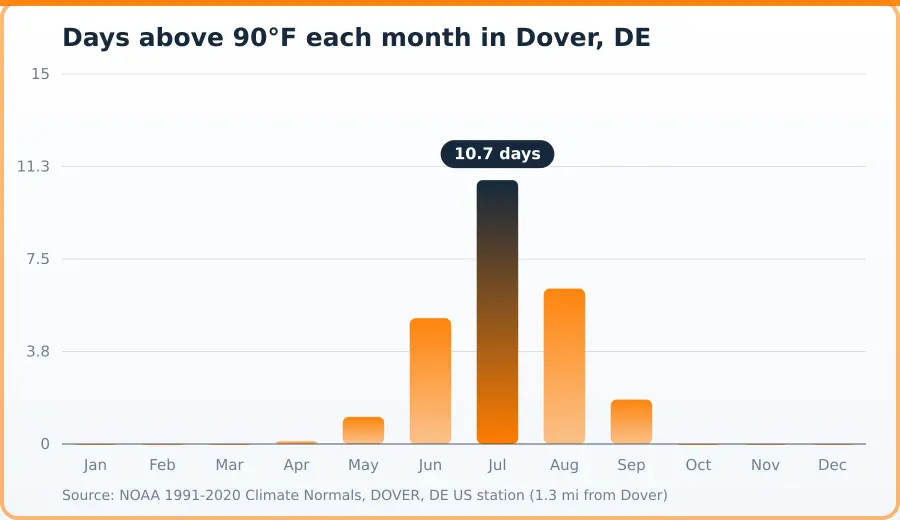
| Period | Days above 90F per month (days) |
|---|---|
| Jan | 0 |
| Feb | 0 |
| Mar | 0 |
| Apr | 0.1 |
| May | 1.1 |
| Jun | 5.1 |
| Jul | 10.7 |
| Aug | 6.3 |
| Sep | 1.8 |
| Oct | 0 |
| Nov | 0 |
| Dec | 0 |
Source: NOAA 1991-2020 Climate Normals, DOVER, DE US station (1.3 mi from Dover). Retrieved October 5, 2026.
Seasonal Bee Removal Guide for Dover, Delaware
Spring: Colony Expansion
As temperatures warm after April 4, bee colonies in Dover expand rapidly, and swarms become visible in yards and near structures. Property owners often spot honeybees establishing new nests in eaves, walls, and tree cavities. Corbett Pest Control connects you with local bee removal specialists who safely relocate colonies rather than destroy them, protecting both your property and the local pollinator population.
Summer: Peak Activity
Summer heat intensifies bee foraging and nesting behavior, with colonies reaching peak population by mid-season. Days at or above 90°F in Dover average 10.7 in July alone, driving bees to seek cooler shelter in structures and triggering urgent removal requests. Local providers accessible through Corbett Pest Control respond quickly to active infestations, using gentle extraction methods that preserve viable colonies whenever possible.
Fall: Migration and Stress
Approaching winter prompts bees to consolidate resources and become more defensive of their nests as the first autumn freeze nears November 4. This seasonal pressure makes established hives in buildings and hollow trees more prone to aggressive behavior and structural damage. Corbett Pest Control helps Dover homeowners arrange removal before cold weather traps colonies inside walls, where they become impossible to extract safely.
Winter: Dormancy and Survival
Winter's freezing nights—averaging 17.8 in December across Dover—force surviving bee colonies into dormancy, though overwintering hives sheltered inside structures remain active during warmer spells. Property owners discover established nests only after cold weather passes and activity resumes. Corbett Pest Control connects you with providers experienced in removing entrenched winter colonies, preventing spring expansion into your home or outbuildings.
Bee Removal FAQs — Dover, DE
Bee removal typically begins with a detailed inspection to locate the hive and assess the infestation. The local provider will safely extract the bees—often relocating them rather than eliminating them—and remove honeycomb and debris. Once the hive is cleared, they'll seal entry points to prevent future occupation. The exact approach depends on hive location and bee species.
Corbett Pest Control links Dover homeowners with independent local bee removal providers who can respond to urgent infestations promptly. Because the providers operate locally, turnaround times are faster than distant services. Contact us with your location and situation, and we'll connect you to an available provider in your area without unnecessary delay.
Bee removal pricing depends on hive size, location (roof, wall, tree, or ground), accessibility, and whether the colony can be safely relocated or must be removed. Structural damage assessment and follow-up sealing also influence the final cost. Each independent provider sets their own pricing; contact them directly for a quote based on your specific situation.
Keep children and pets indoors and away from the work area during removal. Clear pathways and access points so the provider can reach the hive safely and efficiently. If the hive is in a wall or structure, ensure the provider has clear access to that space. Avoid using pesticides beforehand—they can complicate safe relocation efforts.
After removal, seal all cracks, gaps, and openings where bees entered—especially around eaves, soffits, and foundation areas. Remove standing water and eliminate flowering plants directly against your home's exterior if feasible. Trim tree branches away from your roof and walls. Regular inspection of potential nesting sites helps catch early activity before a full hive establishes.
Spring through fall brings peak bee activity in Delaware as colonies expand and seek new nesting locations. Warmer months see the highest removal calls around Dover and surrounding areas. However, established hives can persist year-round indoors, so bee problems can emerge anytime. Early action during active seasons prevents larger, more difficult removals later.
Homeowner Safety Toolkit
Verify Your Dover, DE Pest Control Company
Before you hire anyone, use these independent national resources to confirm credentials, standards, and track record.
EPA
The federal government's own guide to choosing a pest control method and using pesticides safely around your home and family.
Pesticide Safety GuideNPIC
A free, independent hotline run jointly with the EPA and staffed by specialists who can answer specific questions about a pesticide or treatment method before you agree to it.
Ask a QuestionBBB
Look up any pest control company's complaint history, customer reviews, and accreditation status — a free, independent check before you hire.
Check StandingRelated Services
Dealing with bees in Dover? Get fast, targeted treatment from a local provider.
Call (302) 244-5911Areas We Serve in Dover, Delaware
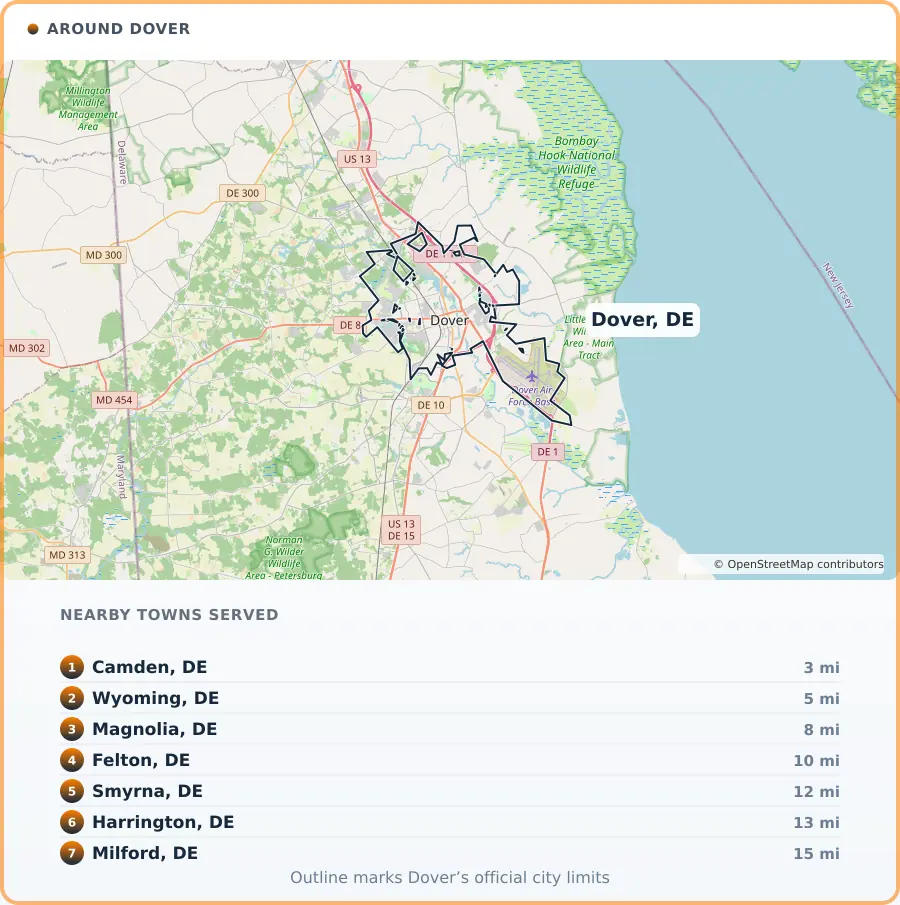
Dover, DE is the centre of the service area, which extends to 7 surrounding towns. The map shows how far that reaches.
Dover, DE Information
Dover carries itself with the quiet confidence of a capital city, even at a population of around 39,000. As Delaware's seat of government, it draws much of its daily rhythm from state offices and from Dover Air Force Base, one of the area's largest employers, giving the community a steady, service-driven backbone. Healthcare, higher education, agriculture, and manufacturing fill out the local economy, while Dover Downs Hotel & Casino keeps a steady flow of visitors passing through.
Neighborhoods like Silver Lake and Rodney Village reflect the city's easy, settled pace, where tree-lined streets sit minutes from downtown's civic buildings and farmland still rolls out toward the edges of town. It's a city built on public service and plain hard work, with small-town warmth close behind.

Photo: Chris Light, CC BY-SA 4.0